When Is a Home Automation System Worth It (and When Is It Overkill)?

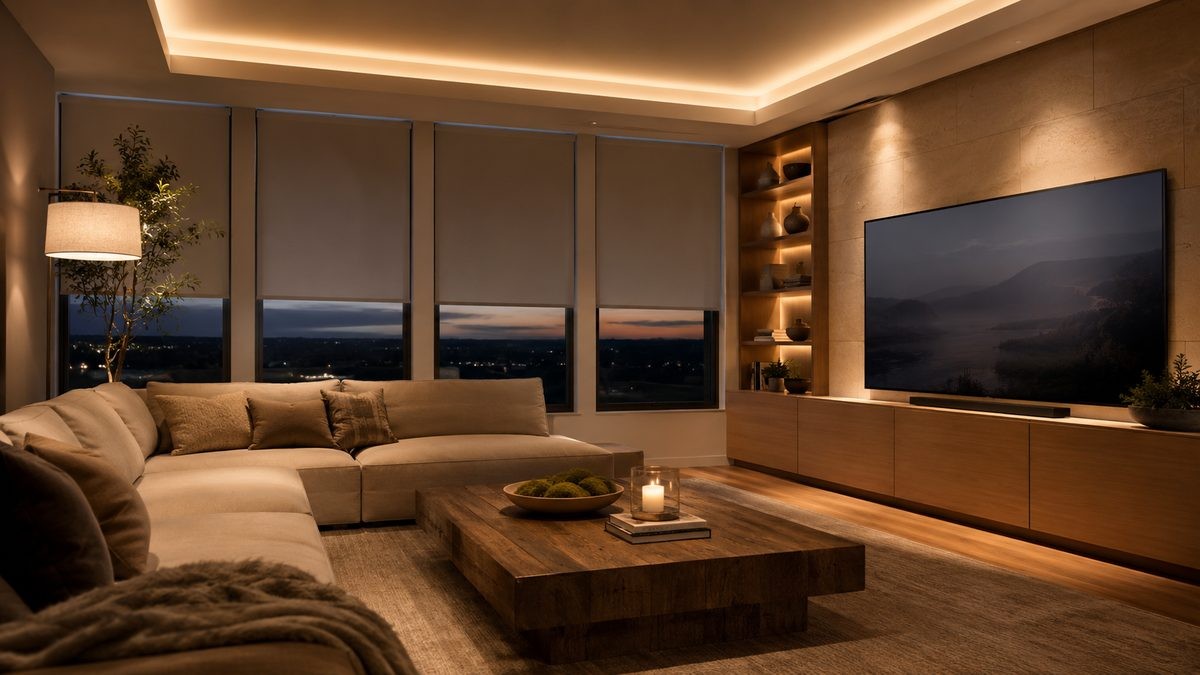
A living room set for the evening, lights dimmed and shades lowered

Integration can transform how a home feels. It is not right for every house, and that is fine. Here is how to tell.

Smart devices are everywhere now. You can add a connected light, a video doorbell, or a smart speaker to almost any home in an afternoon. Full-home integration, where everything works together as one designed system, is a different conversation. Some homes benefit from it enormously. Others genuinely do not need it. The goal is not to fill your house with technology. It is to match the right level of it to the way you actually live.

So before you invest, it is worth asking an honest question. Will integration make your daily life noticeably better, or would a few well-chosen smart devices do the job just as well?

When integration shines

Integration earns its keep in homes with a lot going on. If you have multiple living zones, outdoor spaces, a home theater, or specialty rooms, the value of bringing it all under one roof of control is hard to overstate. Lighting, shades, climate, audio, and video stop being separate chores and start behaving like one coordinated system.

You walk in and the house is already set for the evening. You start a movie and the lights dim, the shades lower, and the sound comes up on their own. You leave for the weekend and a single tap puts the whole house to bed. Integration eliminates wall clutter, syncs your favorite scenes, and quietly simplifies the routines you repeat every day. In a larger home, that difference is felt constantly.

Continue reading

What Does an Integrated Home Really Cost?

A light-filled integrated living room with motorized shades

Why one project is $25,000 and another is a quarter million, and what actually drives the difference.

"What does it cost?" is usually the first question we hear, and it is a fair one. The honest answer is that it depends on what you want your home to do. A few rooms of lighting control and a whole house where lighting, shades, audio, video, climate, and security work together as one are not the same project, and they should not carry the same number.

That is not a dodge. It is the most useful place to start. Once you understand what actually drives the number, the range stops feeling random and starts making sense.

There is no single price, because there is no single home

It helps to think in levels. At the simplest end are standalone devices you buy and set up yourself, a smart speaker here, a video doorbell there. A step up is partial integration, where a few rooms of lighting or whole-home audio are professionally tied together. Then comes whole-home integration, where a single system manages everything through one interface. At the top is luxury integration, where networking, shading, climate, power management, and proactive service all work in concert and the technology all but disappears.

Each level is a different experience, and each carries a different investment. Most of the gap between one project and another comes down to where on that ladder you want to live.

Continue reading

Why We Call Them Integrated Homes (Not Just Smart Homes)

01-integrated-homes-hero-web

What most people call a smart home is really a pile of apps. Here is what changes when everything works as one.

We meet a lot of homeowners who tell us they already have a smart home. They have a voice assistant in the kitchen, a smart thermostat in the hallway, and a few connected plugs around the house. They are not wrong. Those are smart devices. But what they actually have is a collection of gadgets, not a home that works as one.

That distinction is the whole reason we use a different word. We do not build smart homes. We build integrated homes. And once you have lived in one, the difference is hard to unsee.

The problem with "smart"

The word "smart" has been stretched so thin it barely means anything anymore. You can buy a dozen devices that each work fine on their own. The trouble starts when you try to use them together.

You dim the lights from one app. You check the cameras in another. You adjust the shades in a third. Then you pick up a separate remote just to turn on the TV. Each piece is smart. The experience is not. It is a daily scavenger hunt for the right control, and it is the opposite of what this technology promised.

Continue reading
Subscribe to Inspiration
Stay up to date on the latest smart technology ideas and innovations.

Powered By One Firefly   |    Sitemap   |    Privacy Policy